
Real World Applications
The Fast Fourier Transform
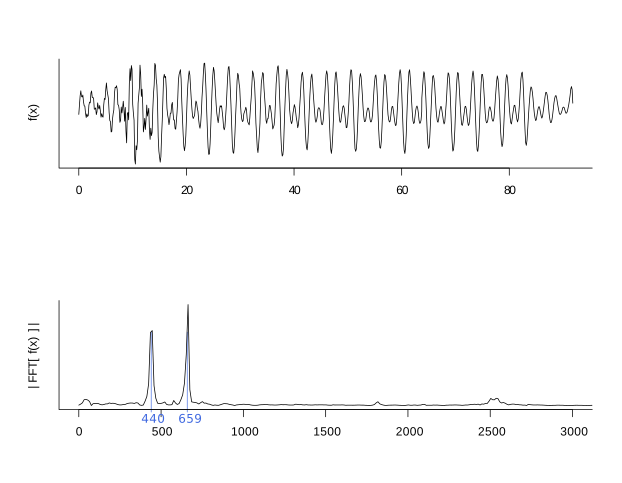
The Fast Fourier Transform (FFT), developed in 1965 by James Cooley and John Tukey, uses sine and cosine waves to break any signal into its basic frequencies. By projecting time-based data onto these trigonometric waves, FFT reveals the strength and phase of each frequency, like finding the musical notes hidden in a complex sound. This breakthrough in signal processing revolutionized everything from audio compression to medical imaging, all rooted in the power of trigonometry.